The Never Ending Story


I am finally at the halfway mark of Mark Z. Danielewski’s Tom’s Crossing. It has taken me a year to get here. I am not a slow reader, just a depressed one, and after the sobering news about my move to Spain falling through last year, I went into a tailspin of wanting to gouge my life out with a spoon.
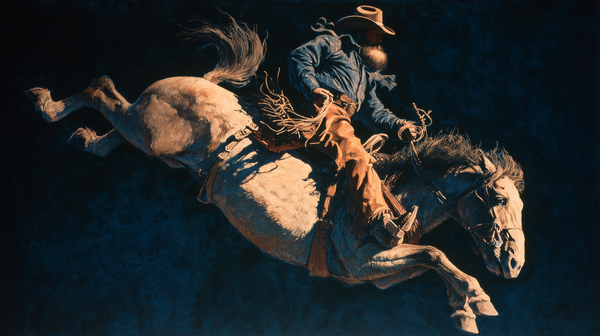
The book is a notorious slab that was released back in October of '25. Even during my hiatus from reading, the visuals never really left my mind. I am a visual person, yet I am constantly stymied by the language here. I grew up in Houston where we don’t have screes or cirques. We have humidity and flat concrete. Being tossed into this 1980s world of horses and Mormons is an education in a landscape that feels entirely alien, and yet I am in awe of it.
Danielewski’s Orvop is transportive, but I have no desire to visit. It is a word jumble for Provo that took me far too long to solve. The villains are too real. The Porch clan represents a sickening, stagnant heteronormativity. I would compare them to Harkonnens, but the Harkonnens have the benefit of being flamboyant. There is no flair with the Porches. There is only the heavy weight of men who use faith as a blunt instrument for their own convenience.
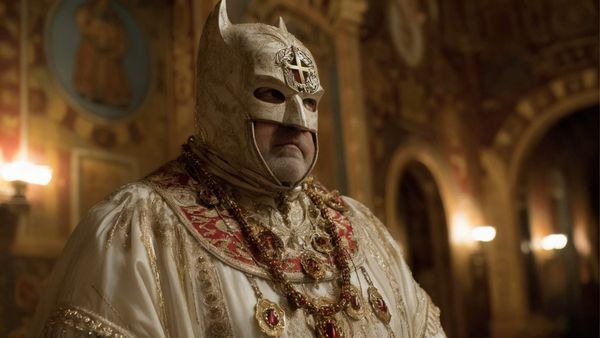
Old Porch is the patriarch and he is disruptively gross. He tracks his route along a map with a thumb while his nail comes loose, leaving a trail of blood that I half-expected to be black. He is a political animal with no sense of politics, a vigilante chasing a teenager into the mountains for a crime he committed himself. Danielewski gives these men lavish, grotesque descriptions, while the fine people on the other side feel thin by comparison. It is hard to read because the rot is given so much more texture than the virtue.
The heart of the book is the journey of Kalin and Landry as they attempt to free two abused horses. I don’t know how they expect to pull it off in 1983 Utah. I think back to my time in Austin, driving a Jeep Wrangler up 281 because the Texas Hill Country is beautiful. But it is also fenced up like a mother fucker. I assume every other beautiful tract of land in this country is the same. The freedom they are looking for feels like a phantom.
The real highlight of the book is the close intimacy the heroes share with the horses. It feeds my inner Tina Belcher. I used to love riding when I was younger, but as you grow older, an invitation to go horseback riding becomes about as rare as an invitation to go sailing. In this story, the horses are vital. While the human supporters are a little flat, the horses are gifted with a massive weight of characterization. They have origin stories. It is amazing, really.
Navidad and Mouse are the reasons I must finish this. I don’t know how they will find their way out, but I want them to have their freedom even if it means I have to crawl through a gauntlet of descriptions detailing the mundane vulgarity of the Porch clan. It reminds me of David Morrell’s Testament, which is that slow-burn dread of being hunted through the wilderness by a force that has only shown itself in small bursts of violence. I am hoping the dénouement doesn't sadden me. In a country defined by fences, I am worried that the Porch clan’s brand of domestic malice is the only thing truly built to last.